For years the competitive front in lighting was efficiency. It has moved to the site. The specifier asks whether the color temperature is consistent across a batch. The contractor asks whether the wiring lands on the right terminal. The owner asks whether the fixture still looks clean three years from now. All three questions end at the same component: the driver.
Key takeaways
- CCT is produced by blending two LED strings. A CCT-capable driver needs two matched constant-current channels plus one dimming signal pair.
- IP is two independent digits: one for solids, one for liquids. IP67 is short-term immersion, not permanent submersion.
- A driver’s IP rating does not set the luminaire’s IP rating.
- IP stops water from getting in. Potting and thermal design handle what condenses inside.
- Ta and Tc are different numbers, and surge, salt mist, UV and sulfur all sit outside the scope of IP.
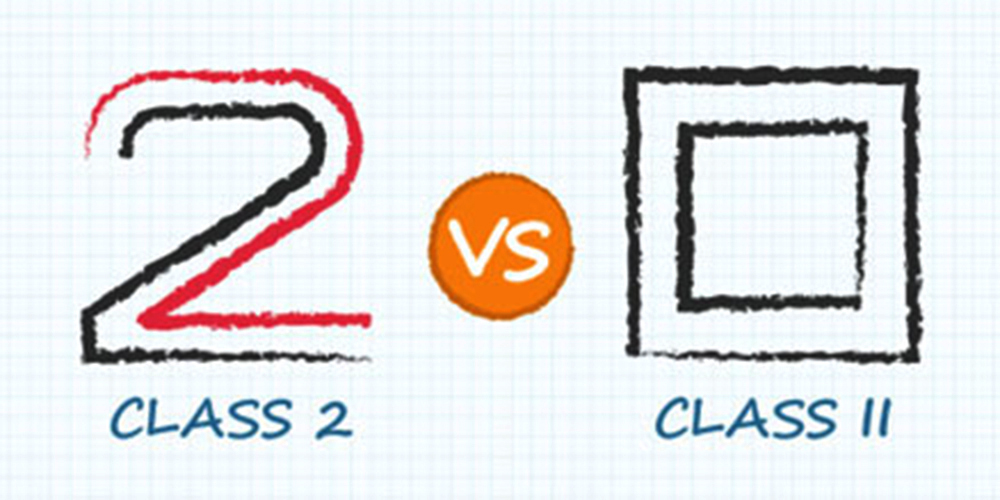
- Class II (double insulation) and Class 2 (limited power supply, UL 1310) are unrelated concepts.
1. CCT: Color Temperature Is Mixed, Not Dialed
CCT, or correlated color temperature, is expressed in Kelvin and describes whether white light reads warm (2700K) or cool (6500K). A tunable-white fixture reaches the values in between by lighting two LED strings of different CCT at the same time – WW (warm white) and CW (cool white) – and blending them through the ratio of the two channel currents.
That ratio is why a CCT-capable driver has a specific output structure: two constant-current channels plus one pair of dimming signal wires (0-10V, PWM or a bus protocol). A driver with a single output cannot produce an intermediate CCT. It can only switch the fixture fully warm or fully cool; the continuous range does not exist.
Three constraints follow, and each one surfaces on site if it is broken:
- The two channels must be current-matched. If they are not, the blended CCT drifts away from target – and it drifts differently from unit to unit.
- The two channels must share one dimming curve. If warm and cool dim along different curves, the color temperature walks as the level drops. This is the most common cause of “the color shifted after dimming.”
- The common terminal cannot be reversed. Common anode ties to positive, common cathode ties to negative, and the two are not interchangeable. Reversed, one channel stays dark, blending fails, and in the worst case the over-current protection trips.
Two further numbers will be raised at acceptance. SDCM (standard deviation of color matching) is imperceptible at 3 or below, becomes visible in side-by-side comparison around 5, and above that produces uneven patches across a single board. On rendering, Ra alone is not enough: R9, deep red, is what makes apparel, food and wood read as rich rather than flat. A fixture with high Ra and low R9 looks washed out.
2. IP Ratings: Two Digits, Two Different Jobs
IP, ingress protection, is defined by IEC 60529. The format is IP followed by two digits, and the two digits answer completely different questions.
| Position | Protects against | Key levels |
|---|---|---|
| First digit (solids) | Dust and foreign objects | 5 = dust-protected, limited ingress with no effect on operation; 6 = dust-tight, no ingress |
| Second digit (liquids) | Water | 4 = splashing water; 5 = water jets; 6 = powerful water jets; 7 = temporary immersion; 8 = continuous immersion; 9K = high-pressure, high-temperature jets |
Reading examples:
- IP64 – dust-tight but splash-proof only. Not acceptable for in-ground fixtures, poolside, or anywhere rain hits directly.
- IP65 – dust-tight plus water jets. The workhorse rating for outdoor lighting.
- IP67 – dust-tight and survives immersion at 1 m for 30 minutes under the standard test. It does not mean the unit can stay underwater. Permanent submersion, as in fountain and pool luminaires, points to IP68 – and because IP68 conditions are agreed between buyer and supplier rather than fixed by the standard, they have to be confirmed in writing for each project.
Three misreadings recur often enough to be worth naming.
First: an IP number without IK. IK is impact resistance, defined by IEC 62262. An outdoor fixture that cracks when struck by a ball or knocked by a tool has lost its IP rating entirely – the crack is the water path.
Second: the driver’s IP taken for the luminaire’s IP. A driver rated IP67 inside an IP65 housing leaves the luminaire at IP65. Acceptance is measured on the complete fixture, yet procurement often checks only the driver.
Third: IP treated as all-weather protection. IP governs what comes in from outside. It says nothing about what condenses inside.
3. Environmental Protection: IP Is the Entry Ticket, Not the Whole Story
Outdoor conditions threaten a power supply in more ways than rain does.
Potting: it is about heat and condensation, not only water
Potting closes the water path, conducts heat from the components to the housing, and removes the air volume inside the enclosure – which removes the source of condensation. An un-potted supply, even in a sealed housing, still breathes with the day-night temperature swing: moisture is drawn in overnight, condenses on the board, and evaporates by day. Repeat that for a few years and the result is corrosion and leakage.
Ta and Tc are two different temperatures
Ta is the maximum permitted ambient temperature. Tc is the temperature permitted at the marked point on the case. Neither is “how hot it feels.” Sites routinely treat Tc as if it were Ta and install the supply into a sealed fixture at the ambient limit – which is the same as running it over-temperature. Every step up in ambient requires derating, and the derating curve has to come from the supplier rather than from an estimate.
Surge, not rain, is the first killer outdoors
Lightning-induced surges and switching transients from inductive loads are assessed under IEC 61000-4-5 with a combination wave (1.2/50 µs voltage, 8/20 µs current), and the industry commonly separates 2 kV from 4 kV classes. Differential mode and common mode must be read separately: a single published figure is usually common mode only, and the real protection is weaker than the number suggests. Coastal sites, hilltop sites and facilities with large motors need this item confirmed on its own.
Salt mist, UV and sulfur: the coastal and industrial trio
Salt mist is tested to ASTM B117 or IEC 60068-2-11 (neutral salt mist), and the question is whether housings, screws and terminals grow white or green deposits within months. UV ageing shows up as yellowed plastics and embrittled cable, which affects mechanical strength and insulation rather than appearance alone. Sulfur-bearing environments – rubber plants, tire plants, some livestock facilities – attack silver plating and solder joints, and no IP rating covers that.
One terminology trap worth repeating
Class II describes a double-insulated shock-protection construction. Class 2 describes a limited-power output classification under UL 1310. The two are unrelated, and writing the wrong one into a specification can invalidate the certification route.
4. Three Questions to Ask Before You Quote
Three questions, asked early, remove most of the rework later.
- Where is it installed? Indoor, sheltered outdoor, exposed outdoor, or submerged – four different combinations of IP and potting.
- What is the maximum summer ambient, and what enclosure does it go into? This sets the derated output, not the nameplate figure.
- Does the site carry lightning, salt mist, UV or sulfur risk? If so, surge class, housing material and cable specification each need separate confirmation.
CCT decides whether it looks right. IP decides whether it can be installed at all. Environmental protection decides how many years it lasts. On a datasheet they are three separate boxes. On site they are one answer: whether the project passes acceptance, and stays passed.